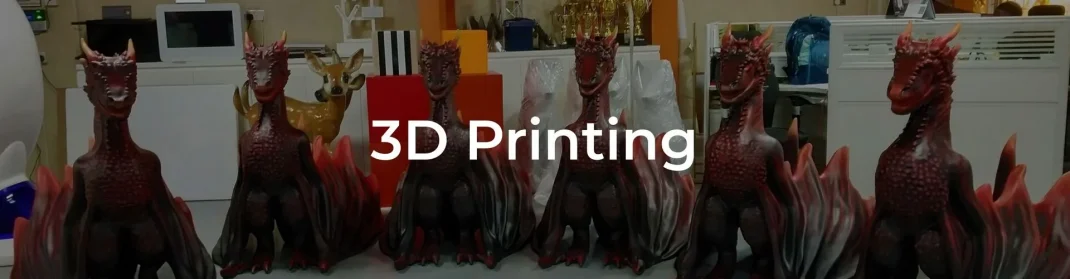
Sculptors once relied heavily on hand tools, molds, and long hours beside raw materials. Industrial technology now gives artists fresh control over size, texture, structure, and repetition. Digital models move directly into physical production, allowing ambitious concepts to take form with impressive accuracy. This gives creative studios practical access to 3d printing Saudi while preserving the artist’s vision and voice.
Digital models guide sculpture design
Sculpture production begins inside design software, where artists build detailed three-dimensional models before physical work starts. Digital modeling allows precise changes to proportions, curves, openings, and surface details. Artists inspect the piece on screen and test versions without wasting clay, stone, wood, or metal. This stage also helps production teams read complex forms clearly.
Complex forms become practical
Industrial printers handle intricate structures that traditional fabrication makes difficult. Hollow sections, fine patterns, unusual angles, and repeated elements become easier to produce through digital manufacturing. Artists gain room to experiment with forms that require extensive manual labor. Large projects also use separate printed sections that join together into one finished sculpture.
Material choices expand
Modern industrial printers work with plastics, resins, metals, and composite materials. Each option offers different qualities related to weight, strength, texture, and surface treatment. Artists select materials according to sculpture size, location, and intended appearance. Material flexibility also supports prototypes that help artists assess proportion before final production, reducing wasted resources during development.
Speed supports creative testing
Traditional sculpture methods may require lengthy preparation before an artist sees a physical result. Industrial printing shortens this gap by moving digital designs into production with fewer manual stages. Artists print a smaller model, review proportions, adjust the digital file, and produce another version. Repeated testing supports better decisions while using less raw material.
Large scale projects gain new options
Industrial printing supports ambitious installations and public artwork. Teams divide a sculpture into manageable sections instead of producing one massive piece in a single operation. Printers produce each section with consistent dimensions, while fabricators assemble the parts afterward. This method gives artists greater freedom when working with large structures, unusual geometries, and detailed surfaces.
Finishing gives artwork character
Printing handles the structural stage, while skilled finishing gives sculpture its final character. Artists and technicians sand surfaces, refine edges, apply coatings, add color, or combine printed sections with other materials. These steps remove visible production marks and help the artwork achieve its intended visual quality.


